
ACM/SIGDA Pioneering Achievement Award
Description
The ACM/SIGDA Pioneering Achievement Award honors an individual for lifetime, outstanding contributions within the scope of electronic design automation. These contributions may be evidenced by pioneering ideas introduced through publications, industrial products, or other significant achievements. The award recognizes the enduring impact of the nominee’s contributions over the course of their career.
Eligibility
The award is open to researchers in the field of electronic design automation who have made outstanding lifetime contributions to the field. Current members of the ACM SIGDA Executive Committee or members of the Award Selection Committee are not eligible for the award. The awardee is typically invited to present a lecture at ICCAD.
Award Items
The award consists of a plaque, a citation, and a USD 1,000 honorarium. The honorarium is funded by the SIGDA annual budget.
Nominee Solicitation
The call for nominations is typically announced via email to SIGDA members, posted on the ACM SIGDA website, and advertised in the SIGDA newsletter. Nominations must be submitted by someone other than the nominee.
A complete nomination package should include the following:
- A nomination letter containing:
- A concise 100-word summary describing the nominee’s contributions and their overall impact
- A detailed description of up to ten major products, such as papers, patents, or software, explaining the contributions embodied in these works and their impact
- A list of up to ten citations corresponding to the major products discussed
- Up to three letters of recommendation, excluding letters from the nominator or the nominee
- Contact information for the nominator
- Biographical information for the nominee, including education and employment history, professional activities, publications, and prior recognition
- Up to three additional endorsements attesting to the impact of the nominee’s work
All standard conflict-of-interest regulations as defined by ACM policy apply. Members of the Award Selection Committee will recuse themselves from consideration of any nomination where a conflict of interest exists.
Schedule
The submission deadline for the 2025 ACM/SIGDA Pioneering Achievement Award has passed, and the nomination process for the 2025 award is now closed.
Please stay tuned for the call for nominations for the 2026 award, which will be announced through SIGDA communication channels.
Selection and Basis for Judging
This award honors an individual who has made outstanding technical contributions within the scope of electronic design automation over the course of their lifetime. Selection is based on the breadth, depth, and sustained impact of the nominee’s contributions. Nominees from academia, industry, and government worldwide are eligible and encouraged.
This is not a best-paper or single-contribution award. Rather, it recognizes lifetime achievement and long-term influence on the EDA field.
Presentation
The ACM/SIGDA Pioneering Achievement Award is presented annually at the Design Automation Conference (DAC) and is also recognized at the SIGDA Annual Member Meeting and Dinner at ICCAD.
Past Awardees
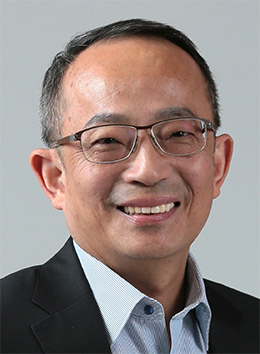
2025
Prof. Tim Kwang-Ting Cheng
The Hong Kong University of Science and Technology (HKUST)
For his outstanding contributions that reshaped global semiconductor design and testing.
2024
Dr. John Darringer
IBM Research

2022
Prof. Ronald Rohrer
Carnegie Mellon University
For the introduction and evolution of simulation and analysis techniques that have supported the design and test of integrated circuits and systems for more than half a century.

2021
Prof. Rob A. Rutenbar
University of Pittsburgh
For his pioneering work and extraordinary leadership in analog design automation and general EDA education.

2020
Prof. Jacob A. Abraham
The University of Texas at Austin
For pioneering and fundamental contributions to manufacturing testing and fault-tolerant operation of computing systems.

2019
Prof. Giovanni De Micheli
EPFL
For pioneering and fundamental contributions to synthesis and optimization of integrated circuits and networks-on-chip.

2018
Prof. Alberto Sangiovanni
University of California, Berkeley
For pioneering and fundamental contributions to design automation research and industry, in system-level design, embedded systems, logic synthesis, physical design and circuit simulation.

2017
Prof. Mary Jane Irwin
Pennsylvania State University
For contributions to VLSI architectures, electronic design automation and community membership.

2016
Prof. Chung Laung (Dave) Liu
National Tsing Hua University, Taiwan
For the fundamental and seminal contributions to physical design and embedded systems.

2014
Prof. John P. Hayes
University of Michigan
For his pioneering contributions to logic design, fault tolerant computing, and testing.

2013
Prof. Donald E. Thomas,
Carnegie Mellon University
For his pioneering work in making the Verilog Hardware Description Language more accessible for the design automation community and allowing for faster and easier pathways to simulation, high-level synthesis, and co-design of hardware-software systems.

2012
Dr. Louise Trevillyan
IBM Research
Recognizing her almost-40-year career in EDA and her groundbreaking research contributions in logic and physical synthesis, design verification, high-level synthesis, processor performance analysis, and compiler technology.

2011
Prof. Robert K. Brayton
University of California, Berkeley
For outstanding contributions to the field of Computer Aided Design of integrated systems over the last several decades.

2010
Prof. Scott Kirkpatrick
The Hebrew University of Jerusalem
For pioneering simulated annealing and demonstrating how hard computational problems can be solved by analogy to physical systems, as exemplified by “On Solving Hard Problems by Analogy.”
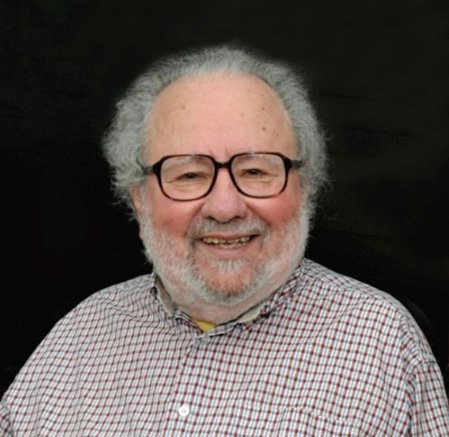
2009
Prof. Martin Davis
New York University
For his fundamental contributions to algorithms for solving the Boolean Satisfiability problem, which heavily influenced modern tools for hardware and software verification, as well as logic circuit synthesis.

2008
Prof. Edward J. McCluskey
Stanford University
For his outstanding contributions to the areas of CAD, test and reliable computing during the past half of century.

2007
Dr. Gene M. Amdahl
Amdahl Corporation
For his outstanding contributions to the computing industry on the occasion of the 40th anniversary of Amdahl’s Law.
Video of Dr. Amdahl’s dinner talk and a panel debate are available on the ACM digital library.