

The ACM/SIGDA Pioneering Achievement Award recognizes individuals whose lifetime contributions have fundamentally shaped the field of electronic design automation (EDA). SIGDA is pleased to announce that Professor Tim Kwang-Ting CHENG has been selected as the recipient of this distinguished honor for his decades-long, transformative impact on EDA, VLSI design, verification, and cross-disciplinary research that bridges electronics, photonics, computer vision, and medical image analysis.

About the ACM/SIGDA Pioneering Achievement Award
The ACM/SIGDA Pioneering Achievement Award honors a person for lifetime, outstanding contributions within the scope of electronic design automation, as evidenced by pioneering ideas, influential publications, industrial products, and lasting impact on research and practice.
Past awardees represent the most influential leaders in EDA, including pioneers in design automation, verification, simulation, logic synthesis, VLSI systems, and hardware description languages.
Award items include a plaque, a citation, and a $1000 honorarium funded by the SIGDA annual budget.
The award is typically presented at DAC and recognized again at the SIGDA Member Meeting and Dinner at ICCAD.
About Professor Tim Cheng
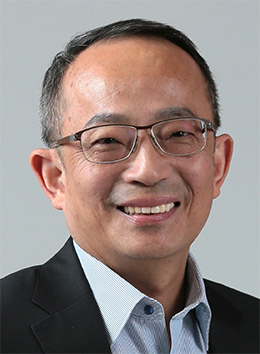
Vice-President for Research and Development, HKUST
Chair Professor, ECE & CSE, HKUST
Director, HKUST–WeBank Joint Lab
PhD, Electrical Engineering and Computer Sciences, UC Berkeley
Professor Tim Cheng is an internationally renowned researcher, educator, and academic leader whose work has deeply influenced the fields of electronics testing, design verification, electronic and photonic design automation, computer vision, VLSI, and medical image analysis.
Academic and Leadership Roles
Prof. Cheng joined HKUST in 2016 as the Dean of Engineering and currently serves as the Vice-President for Research and Development. Before HKUST, he was a long-time faculty member at UC Santa Barbara (UCSB), where he held numerous major leadership roles including:
- Associate Vice-Chancellor for Research (2014–2016)
- Acting Associate Vice-Chancellor for Research (2013)
- Chair, Department of Electrical and Computer Engineering (2005–2008)
- Founding Director, Computer Engineering Program (1999–2002)
Prior to academia, he spent five years at AT&T Bell Laboratories, contributing to early advances in computing and communication technologies.
Research Excellence and Impact
Prof. Cheng is a world authority on design verification, electronics testing, and design automation of electronic and photonic systems. His pioneering contributions have influenced both academic research and industrial practice.
Key achievements include:
- Over 500 technical papers, 5 books, and 12 US patents
- Leadership of the U.S. DoD MURI Center for 3D Hybrid Circuits
- Twelve Best Paper Awards and one Distinguished Paper Citation
- Recognized as a Top 10 Author in DAC’s Fourth Decade
- Numerous influential contributions transferred into commercial products
- Fellow of IEEE and the Hong Kong Academy of Engineering Sciences
In 2020, he secured HK$443.9 million from Hong Kong’s InnoHK initiative to establish the AI Chip Center for Emerging Smart Systems, a major multi-university research center advancing IC and AI chip design.
Service to the EDA Community
Prof. Cheng has been an active and dedicated contributor to the global EDA community:
- Former Editor-in-Chief, IEEE Design & Test of Computers
- Member, IEEE CEDA Board of Governors
- Member, IEEE Computer Society Publications Board
- Contributor to ITRS technology working groups
- Advisor and collaborator across academia, industry, and government
His sustained service and leadership have helped shape research directions, technology roadmaps, and the cultivation of future generations in the design automation community.
Congratulations to Professor Tim Cheng
SIGDA extends its warmest congratulations to Prof. Cheng on receiving the ACM/SIGDA Pioneering Achievement Award, recognizing his exceptional technical achievements, scholarly leadership, and profound lifetime impact on the field of electronic design automation.
